
My story with Neil deGrasse Tyson
Neil deGrasse Tyson has been teaching me for years.
He has no idea.
I have never taken one of his classes. I have never sat in a lecture hall while he stood at the front. He has never graded one of my assignments, answered one of my questions, or even heard my name.
As far as I know, Neil deGrasse Tyson has absolutely no idea that somewhere in South Korea there is a guy who considers himself one of his students.
But I do.
And, strangely enough, I cannot even tell you when I first learned who he was.
He is one of those people who somehow just enters your awareness. I had seen him in documentaries and science programs for years, particularly on National Geographic. I knew the face. I knew the voice. I knew he was that extraordinarily enthusiastic astrophysicist who could somehow start talking about a planet and end up talking about humanity.
But knowing who someone is and becoming their student are two very different things.
I haven't been Neil's student all my life.
That part began only four or five years ago.
It Started While Washing the Dishes
Like many important things in life, this one started without any grand plan.
I began listening to StarTalk while doing other things.
Cooking.
Washing dishes.
Walking to the gym.
I wanted something useful playing in the background. If I was going to spend thirty minutes chopping vegetables or walking somewhere, I figured I might as well learn something while doing it.
So I started playing episodes of StarTalk.
Then I played another.
And another.
And somehow, what began as background listening became something dangerously close to an addiction.
I started going backward through the catalog.
Older episodes.
Then older ones.
Then even older ones.
I cannot honestly claim that I have listened to every episode of StarTalk ever produced, but I would be comfortable saying I have probably heard somewhere around 80 or 90 percent of them.
At some point, I was no longer simply listening to a science podcast.
Without realizing it, I had built myself an informal university.
And Neil was becoming one of my professors.
An Entire Faculty Appeared
One of the greatest things StarTalk gave me was not simply Neil's knowledge.
It gave me other people.
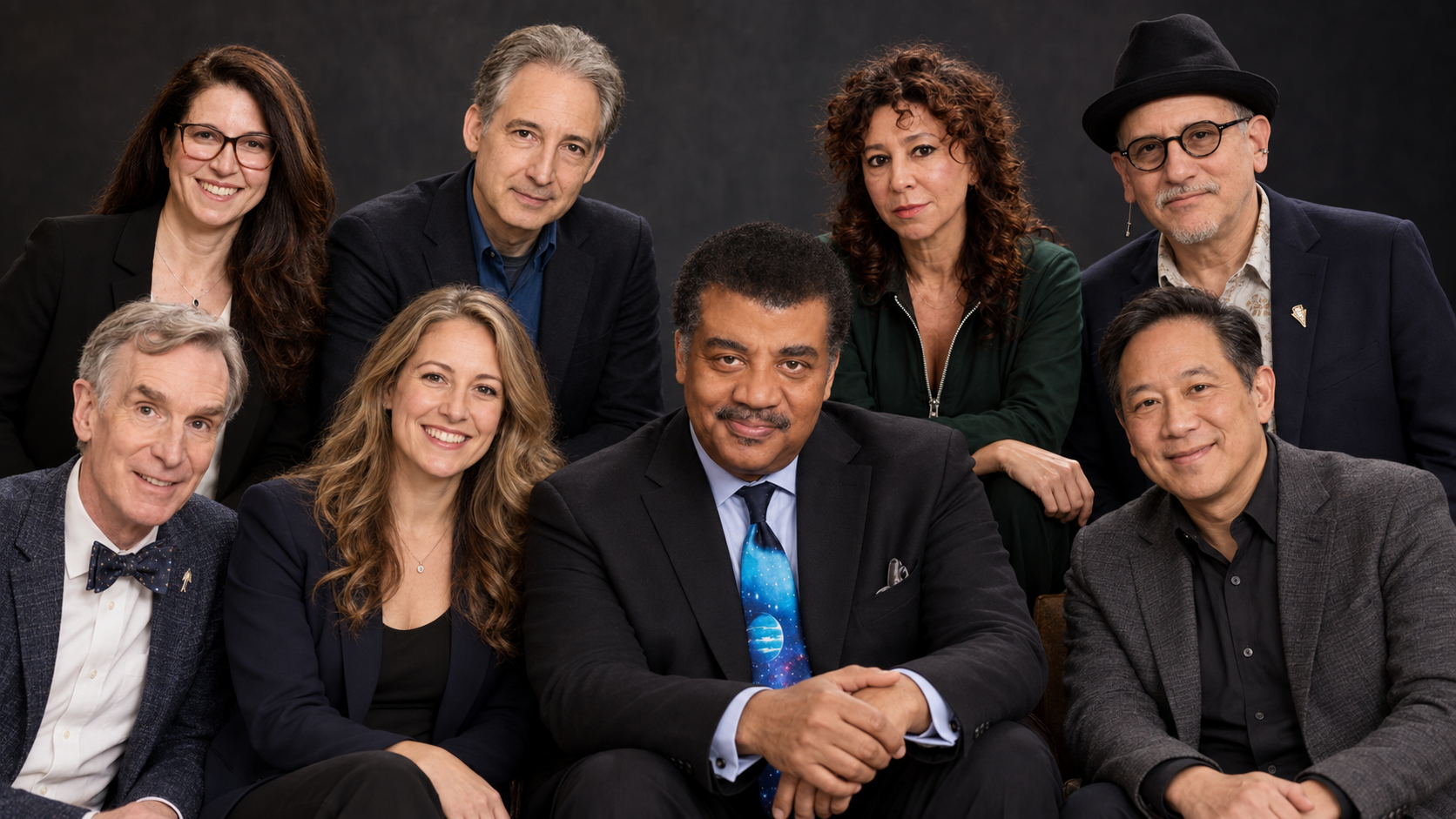
And many, many more.
The list eventually became far too long to maintain.
Some were people whose names I had encountered before but whose actual work I knew very little about. Others were completely new to me. Some became familiar enough that hearing them again felt almost like having a favorite professor return for another lecture.
And they were not all astrophysicists.
That was important.
One episode might lead me toward neuroscience. Another toward planetary science. Another toward mathematics, biology, climate science, psychology, philosophy, history, or engineering.
Sometimes the guest was not even a scientist.
Writers came through too.
Andy Weir is a good example. I am a huge fan of The Martian and Project Hail Mary. Hearing conversations with people like him added another dimension to work I already loved.
And this became one of the most important things Neil did for me as a teacher.
He did not only teach me what he knew.
He kept introducing me to people who could teach me what they knew.
A good teacher does not simply give you answers.
A good teacher makes you curious enough to go looking for more.
Then Came the Books
Listening was only the beginning.
Eventually I developed a habit.
If someone appeared on StarTalk and I found them interesting, I would look them up afterward.
I would find another interview.
Then perhaps a lecture.
Then their work.
Then their books.
And one book would inevitably lead to another.
The same thing happened with Neil himself.
I started reading his books, including Starry Messenger and Just Visiting This Planet. More recently, Take Me to Your Leader joined the list.
And following Neil's intellectual trail eventually took me backward to someone who had influenced him enormously.
At that point, of course, I had to go back and read Cosmos.
There were other paths too.
I already knew Richard Dawkins before StarTalk. His name certainly was not new to me. But there is, again, a difference between knowing that someone exists and becoming genuinely interested in their ideas.
Through these conversations, I became much more interested in Dawkins and eventually found myself reading books such as The God Delusion and following more of his work.
This kept happening.
Scientist.
Book.
Question.
Another scientist.
Another book.
Five more questions.
Eventually I stopped being able to identify exactly where one intellectual rabbit hole had started.
And that was wonderful.
Outside My Own Little Academic Box
My original academic and professional background was computer science and software engineering.
That was my world.
Computers made sense to me. Software made sense to me. I had studied them academically, worked with them professionally, built things, broken things, fixed things, and spent years thinking in that particular way.
Then suddenly, during ordinary evenings in my kitchen, I was regularly being exposed to astrophysics, neuroscience, planetary science, biology, mathematics, psychology, and questions about consciousness, evolution, the origins of life, and the universe itself.
I was very much outside my field.
And something interesting happened.
Instead of being intimidated by that, I became excited by it.
I started realizing that you do not need permission to become interested in another field.
You don't need a degree in astrophysics before you are allowed to ask questions about the universe.
You don't need to be a neuroscientist before you can start learning how the brain works.
You can simply ask a question.
Then another.
And then follow them as far as you are capable of going.
It did not make me an expert in all these subjects.
Far from it.
What it did was make me less afraid of complicated ideas.
And somewhere along the way, learning stopped feeling like something neatly divided into academic departments.
It became one enormous conversation.
My Comfort Zone
Eventually, StarTalk became something else too.
It became a comfort zone.
Whenever I felt uncertain about my life, whenever I questioned a decision, whenever I wondered whether I was wasting my time or heading in the wrong direction, I found myself going back to it.
I would put on an episode.
And I would learn something.
Sometimes it was about black holes.
Sometimes neurons.
Sometimes mathematics.
Sometimes history.
Sometimes something so completely unrelated to whatever was bothering me that it forced my brain to leave its little loop of anxiety and look outward again.
And over the years, Neil gave me something that turned out to be much more useful than a collection of scientific facts.
He gave me a cosmic perspective.
The more I learned about the universe, the harder it became to look at our world in quite the same way.
Earth is enormous when you are standing on it.
Our countries feel enormous. Our cities feel enormous. Our arguments feel enormous. The problem occupying our mind on a particular Tuesday morning can sometimes feel as though it is the most important thing happening anywhere.
Then you remember where you are.
A small human being living on a small planet orbiting one ordinary star among hundreds of billions of stars in our galaxy, in a universe containing more galaxies than the human mind can comfortably imagine.
And suddenly the scale changes.
That does not mean our problems are meaningless.
Pain still hurts. Relationships still matter. Injustice matters. What we do to one another matters enormously to the people experiencing it.
But so many of the things we allow to consume us become smaller when viewed against a cosmic background.
The petty arguments.
The artificial divisions.
The obsession with status.
The certainty that our particular group, nation, culture, or generation somehow occupies the center of existence.
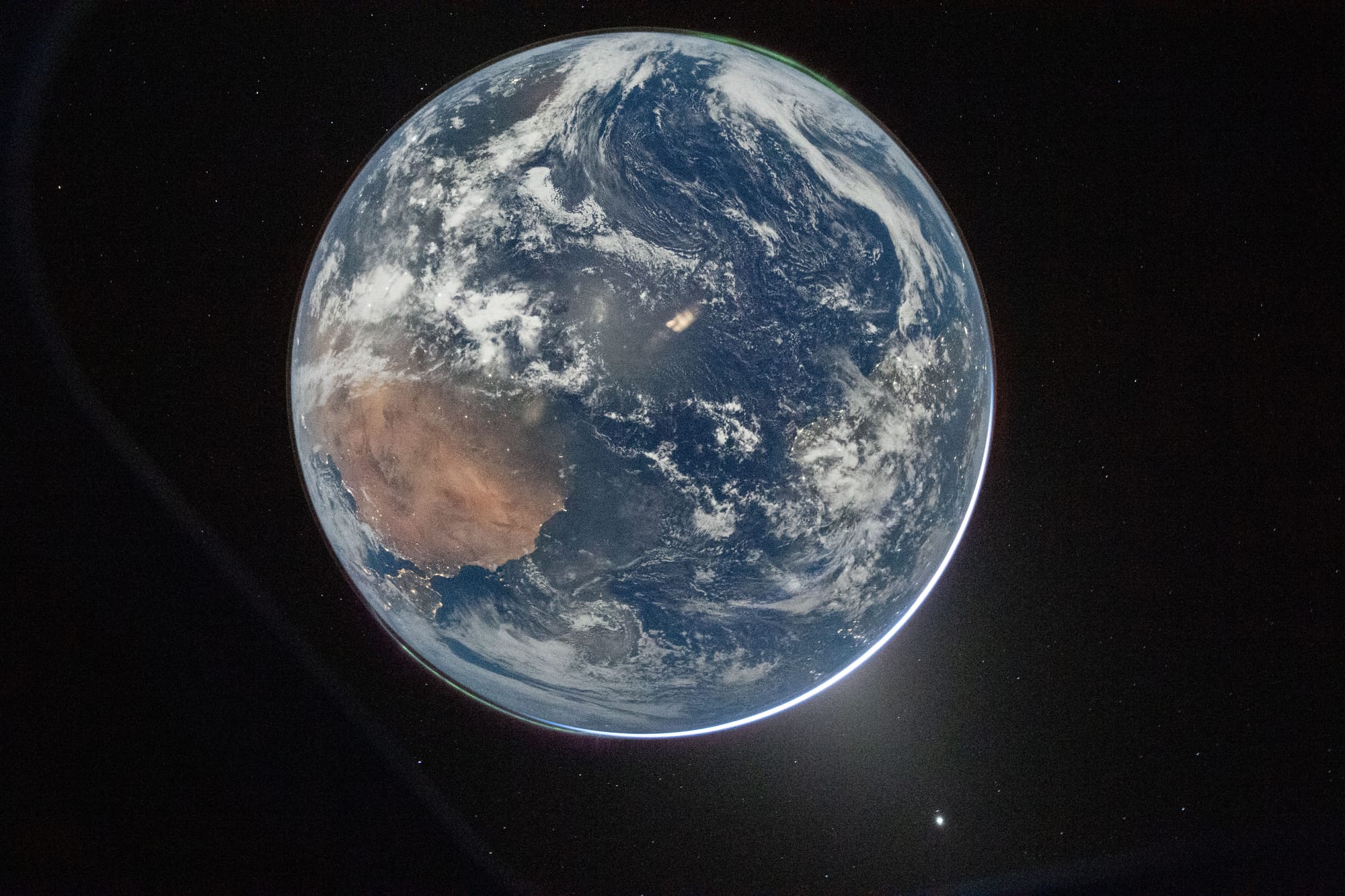
From far enough away, there is no border visible between two countries.
There is just Earth.
That perspective has genuinely affected how I try to live.
Not because thinking about galaxies magically solves problems, but because it reminds me how improbable, brief, and precious this experience is.
We are here for an absurdly short amount of time.
Why spend so much of it making our already tiny world even smaller?
That, to me, is the cosmic perspective we need more of.
Not to make human life seem worthless.
Quite the opposite.
To understand how small we are—and therefore how ridiculous it is to waste the little time we have fighting over things that become almost invisible when seen from far enough away.
There is something strangely reassuring about that perspective too.
Your personal problems can feel enormous when they occupy your entire field of vision.
Then someone starts explaining the formation of galaxies, the evolution of life, the nature of time, consciousness, or a mystery humanity has been trying to solve for generations.
Your problems do not disappear.
But the world becomes larger again.
And sometimes that is exactly what I need.
Two Ideas That Stayed With Me
Through Neil, I encountered an old quote from the American educator Horace Mann:
“Be ashamed to die until you have won some victory for humanity.”
That sentence stayed in my head.
So did another idea, this time from Rainer Maria Rilke:
“Be patient toward all that is unsolved in your heart and try to love the questions themselves.”
Neil did not write either of these.
That actually makes them more relevant to this story, not less.
Because that is another thing teachers do.
They pass ideas along.
Sometimes the most important sentence a teacher gives you was written by someone who died a century before either of you were born.
The teacher's role is sometimes simply to place that idea in front of you at exactly the moment you are ready to understand it.
Those two ideas began bothering me—in the best possible way.
What would count as my victory for humanity?
And what questions was I actually willing to spend my life asking?
What Do You Want to Do With the Next 50 Years?
At some point, the questions stopped being abstract.
I started thinking seriously about my own life.
What did I actually want to spend the next fifty years doing?
Maybe sixty.
If I get very lucky, perhaps seventy or more.
When I was much younger, I had chosen computer science.
I do not regret that decision.
Not even slightly.
I love computers. I love technology. That education gave me a profession, skills, opportunities, and a way of thinking that remains deeply embedded in who I am.
But I had chosen that path when I was basically a teenager.
And think about how strange that is.
We ask people who have barely experienced adulthood:
What do you want to do with your life?
Then we expect the answer to remain valid for the next sixty years.
How is a teenager supposed to know?
Years later, I knew myself differently.
I had studied.
I had worked.
I had spent time in industry and commercial technology.
I had taught.
I had changed.
My earlier way of thinking had not been wrong.
But it wasn't entirely right either.
Maybe “incomplete” is the better word.
And I started realizing something surprisingly liberating:
I could start again.
Apparently, I Didn't Want the Telescope
There was another realization.
As much as Neil had made me love astronomy, astrophysics, and space even more than I already did, I eventually figured out that I did not actually want to become an astrophysicist.
Space is fascinating.
Telescopes are wonderful.
Give me a clear night, a telescope, and something interesting in the sky and I will happily nerd out for hours.
But as a career?
I did not imagine myself spending the next several decades primarily studying astronomical data and solving enormous mathematical equations.
I wanted my science a little dirtier.
Literally.
I wanted my hands near gray matter in a laboratory.
I wanted microscopes.
Neurons.
Cells.
Living organisms.
Biological systems.
I wanted to look at something alive and ask why it behaves the way it does.
The telescope could remain a hobby.
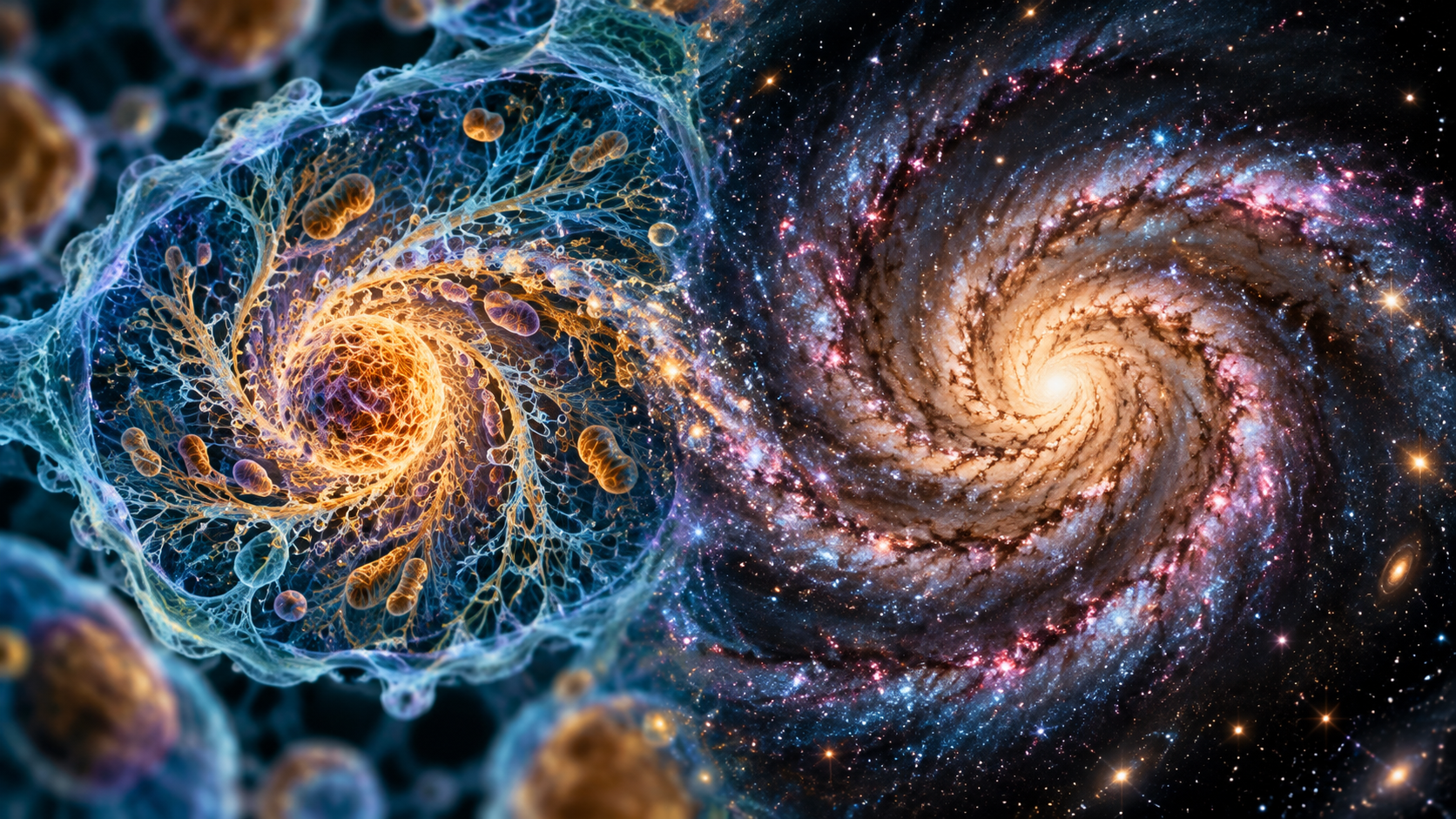
For the work I wanted to dedicate my life to, I found myself wanting to look downward through a microscope rather than upward through a telescope.
That did not immediately produce the words Health Science.
That journey deserves an article of its own.
My interest in health had already been developing separately through my own attempt to live a healthier life—nutrition, exercise, well-being, longevity, and an increasing fascination with the human body.
Neil did not create that interest.
But this new intellectual curiosity poured fuel onto it.
Something that had been personal started becoming academic.
Something I cared about for myself started looking like something I could study seriously.
Perhaps even professionally.
And Then There Was Teaching
There was another piece of the puzzle that had already been sitting in front of me.
I was already teaching.
Languages.
Web design and development.
Occasionally even some mathematics and physics.
And I genuinely enjoyed it.
But gradually, the kind of teacher I imagined becoming started changing.
I realized that I wanted to learn more complicated things.
I wanted to understand difficult ideas properly and then find a way to make them understandable to someone younger who might initially look at them and think:
There is absolutely no way I am going to understand this.
I love that moment when something complicated suddenly clicks for another person.
When confusion becomes:
“Oh. That's what it means.”
Then I started asking myself another question.
Why should I only do that for fun?
Why couldn't that actually be my life?
Research something difficult.
Understand it.
Ask a question nobody has answered properly yet.
Maybe contribute something new.
Then walk into a classroom and teach the next generation what we know.
And, perhaps more importantly, teach them what we don't know.
Once I started thinking like that, the idea of going back for an undergraduate degree stopped looking like the final destination.
It became step one.
For the first time, I started planning beyond it.
Graduate school.
Research.
Maybe a doctorate.
Maybe, eventually, becoming a professor and researcher myself.
Not simply teaching because I knew something.
Teaching because I was still actively trying to discover something.
A Teacher Who Never Knew
And this is the strange part of the story.
Neil deGrasse Tyson did not tell me to study Health Science.
He did not tell me to leave software engineering.
He certainly did not sit down with me and design some grand academic career plan.
In fact, I am not leaving computers behind at all. They remain part of who I am, and I suspect my background will follow me into whatever kind of research I eventually do.
What Neil did was much more subtle.
He made curiosity feel valuable again.
He showed me people who had dedicated their lives to questions.
He introduced me to scientists I began following, books I might never have picked up, fields I had never seriously explored, and questions I did not previously know enough to ask.
And he gave me a perspective large enough to make my own world occasionally feel small.
Not unimportant.
Just small.
Small enough to remember that many of the things we treat as enormous are temporary.
Small enough to remember that we all occupy the same tiny planet.
Small enough to realize that our time here is limited—and that perhaps the best thing we can do with some of it is learn something, contribute something, help someone, and leave behind a little more knowledge than we found.
Eventually those questions started pointing back at me.
What are you curious about?
What are you willing to spend decades studying?
What do you want to contribute?
What would your victory for humanity look like?
I still don't know the answers to all of those.
Maybe Rilke was right.
Perhaps I am supposed to live the questions for a while.
But I know much more about the direction now.
I want research.
I want academia.
I want to study living systems.
I want to understand the brain.
I want to teach.
And if I am fortunate enough to contribute even one small useful thing to the enormous pile of human knowledge before I am gone, I think I will be pretty satisfied with that.
So, Thank You, Professor
There is a decent chance Neil deGrasse Tyson will never read this.
That's okay.
He has never met me.
He doesn't know my name.
He never saw me sitting in one of his classrooms.
But somewhere on the other side of the planet, while I was cooking dinner, washing dishes, walking to the gym, or wondering what the hell I was doing with my life, he was teaching me.
He taught me about stars, planets, black holes, and the universe.
But more importantly, he taught me to zoom out.
To remember how small our world really is.
To remember how brief our time on it is.
To remember that the universe does not revolve around me, my problems, my country, my generation, or even our species.
And strangely, instead of making life feel insignificant, that perspective made life feel more valuable.
He pointed toward people and ideas that made me want to keep learning.
And somewhere along that journey, one of his students decided that he wanted to become a scientist.
Then that student decided that maybe, one day, he wanted to become a professor too.
So thank you, Dr. Tyson.
You never knew I was your student.
But I was.